Curfew under martial law
The Museum of InnocenceCurfew under martial law was a restriction on evening movement imposed after the September 1980 military coup. In the novel, it intrudes directly into Kemal’s established visits to Füsun and her family in Çukurcuma: the hour he must leave becomes a measure not of how long he has been there, but of how much time with Füsun he has been denied.
The Curfew and the Evening Routine
Before the coup, Kemal’s visits followed the rhythms of the Keskin household. From his first supper on October 23, 1976, to his last night there on August 26, 1984, he went 1,593 times over seven years and ten months. He usually arrived around seven in the evening and, by his estimate, stayed about five hours, often leaving around midnight. The television helped set that domestic schedule: the family watched its programs together, and the nightly closing ceremony marked the point at which they remembered the time.
The new restriction broke into this pattern after the coup in September 1980. Martial law brought a ten o’clock curfew, requiring Kemal to leave the house at a quarter to ten. The shortened visit ended before he felt he had seen enough of Füsun. A routine that had once carried him through long evenings at the supper table now had a state-imposed deadline.
Political Authority at the Supper Table
The curfew was part of a broader military presence in daily life. During television news, the generals condemned politicians and dissident intellectuals and lectured the country about its supposed failings. Reports of arrests and executions reached the Keskin family’s table; when such news came up, the family fell silent. In those moments Kemal felt closer to Füsun, as though the shared silence made him part of the family.
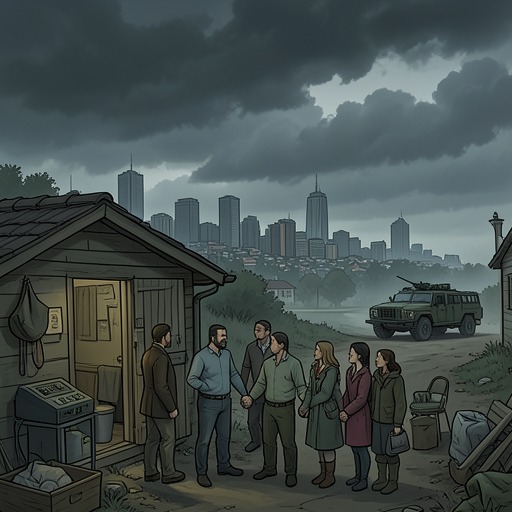
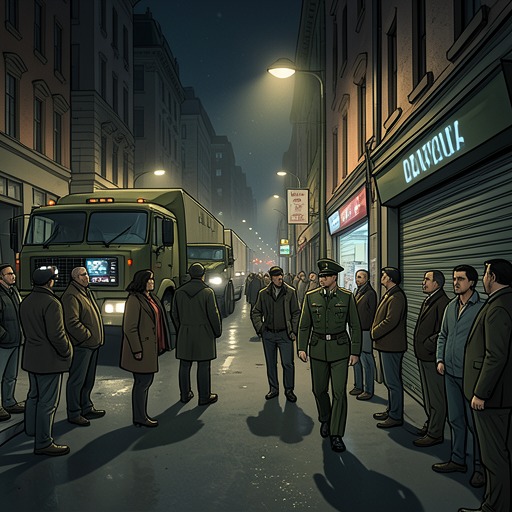
The restrictions also governed the streets beyond the house. On the coup’s first day, Kemal watched reports and images of the generals with his mother while wondering how Füsun and her family were faring in Çukurcuma. Later, the ten o’clock deadline made even the familiar drive home urgent: Çetin had to hurry through dark, rapidly emptying streets. The curfew thus shaped both the end of the visit and the journey away from it.
A Deadline Experienced as Loss
Kemal describes the required departure as a distinct kind of deprivation. In his recollection, being made to leave at a quarter to ten hurt as acutely as not seeing Füsun at all, because the visit had been cut short before his longing was satisfied. Even years later, news of the military’s displeasure with the nation brought back, above all, the memory of being rushed home without his full measure of time with her.
One later evening tests the boundary in a striking way. At nine minutes to eleven, Füsun gave Kemal a long, cautious look; he lit the cigarette between her lips, and she touched the hand holding the lighter. He left at ten past eleven, after the curfew, aware that he had put both himself and Çetin at risk. That night, his happiness at realizing that Füsun might ultimately choose him eclipsed his concern about the danger. The episode does not erase the restriction; it shows how an intimate exchange could make him cross a boundary he otherwise experienced as painful and binding.
Private Time and Public Time
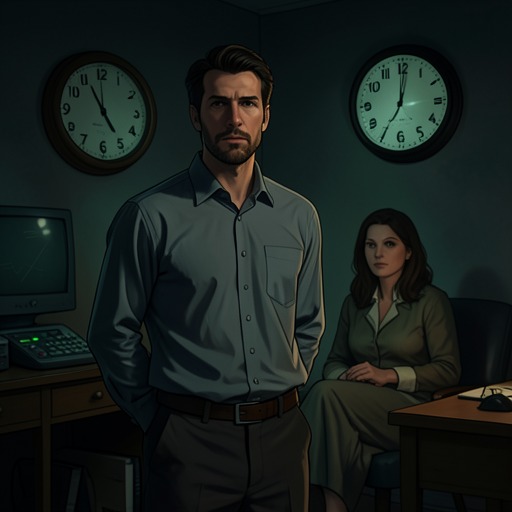
The curfew gives political force to the novel’s contrast between official time and the private time of the Keskin household. A large wall clock stood near the family’s door as a reminder of the outside world, while the television had become the household’s practical timekeeper. Under martial law, the deadline was no longer merely a clock’s indication or a television schedule: it determined when Kemal had to stop being with Füsun and return to the streets.
After the coup, Kemal resolved to put his own life in order, including drinking less and restraining his urge to collect objects. Yet the curfew’s most enduring meaning in his account is personal rather than administrative. Its rule of departure turns state power into a repeated interruption of love, and makes the lost minutes at the supper table part of the memory he carries forward.